| ← All communiqués |
|
||
|
25 August 2025
Markets & Economy | South Africa's 3% Inflation Target |
||
|
In the latest GrayIssue (Allan Gray, Issue 304), Sandy McGregor provides an excellent analysis of the South African Reserve Bank's recent decision to target 3% inflation, shifting from the traditional mid-point of 4.5% in the 3-6% range. McGregor's key points:
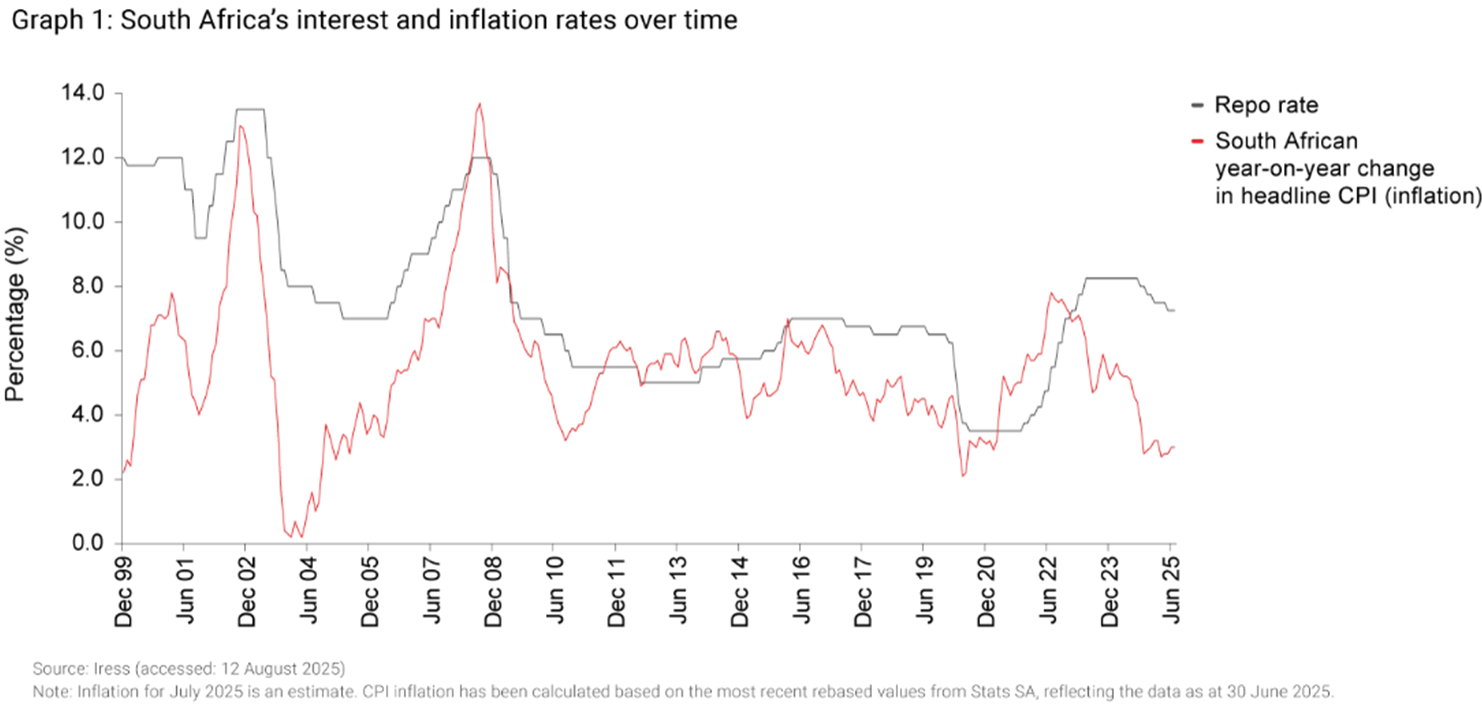
What opportunities does a 3% inflation target unlock?
This move is more than just a technical adjustment. It is a philosophical signal. Inflation is indeed a “stealth tax” that punishes the poor disproportionately, while those with assets find ways to hedge. Anchoring expectations at 3% gives South Africa a chance to reprice risk, reduce inequality and stimulate long-term growth. But, as Sandy notes, we must temper optimism with realism. Inflation outcomes are influenced not just by monetary policy, but by global trade flows, oil dynamics, and structural efficiencies. A sudden shock could still test the resilience of a 3% anchor. Still, I agree with Sandy's conclusion: this is an opportunity we should not miss. Integrated Wealthcare Management isn't a once-off report, it's a relationship-based process that helps you navigate complexity, unlock clarity, and stay on course over the long term. We're looking forward to continuing this journey with you. 
Shane Thom, CFP® GTP(SA)™, CFA Affiliate 🏉🏆🏆🏆🏆 🏏🏆 |



Editor: Shane Thom, Silke Financial Services FSP No. 12462 · An Authorised Financial Services Provider Copyright © 2025 by Silke Financial Services CC – All Rights Reserved. |