| ← All communiqués |
|
||
|
5 April 2017
The Donkey, the carrot, or the club? |
||
|
Belief systems are amazingly powerful. Nationalism without ego, for example, can carry a people to the moon. Ego on the other hand, is one of the greatest killers of effective solidarity. When someone has ulterior motives, and tries to collect all the carrots and is in general more concerned about themselves than the team - it is poisonous. 
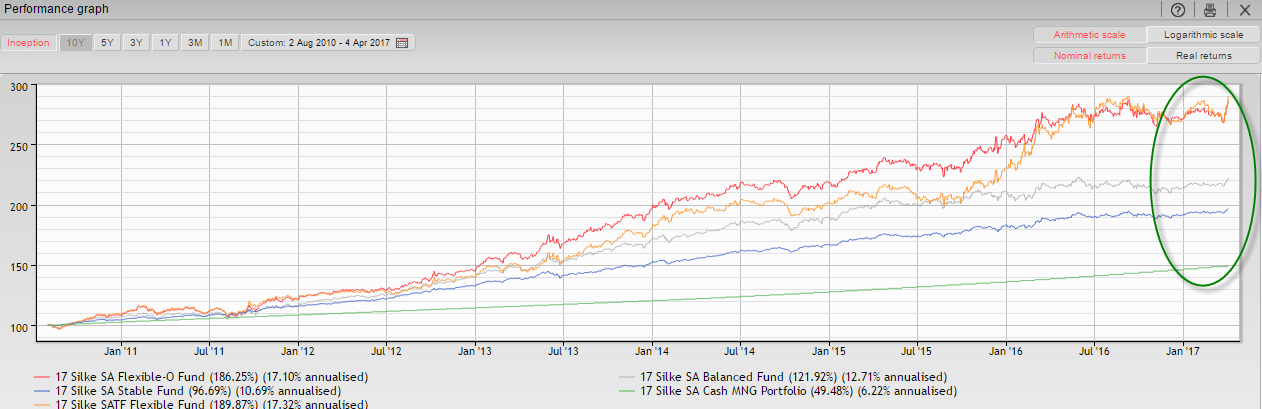
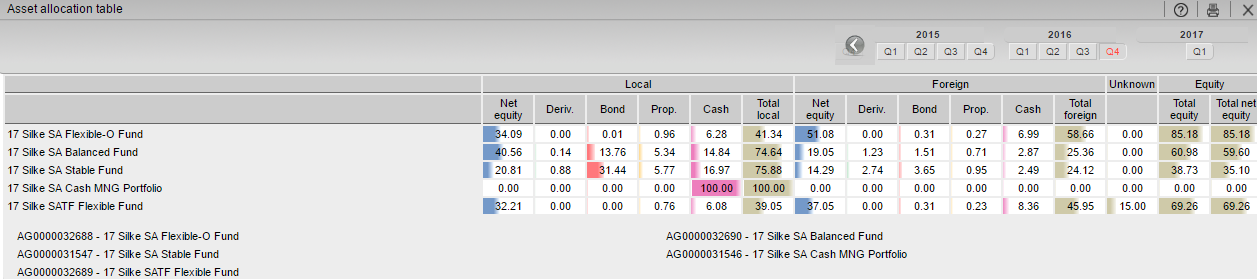
Below notes were sourced from our business development manager at Allan Gray: Monday saw the first significant consequence of the recent political shenanigans that have taken place. Standard & Poor acted decisively by lowering South Africa's sovereign debt credit rating to sub-investment grade. What was downgraded exactly? There is a difference between ratings of local currency (rand) issued debt and foreign-denominated debt issued in international markets. It was South Africa's foreign-denominated debt that has been downgraded to sub-investment grade while our domestic debt remains one notch above sub-investment grade. What are the consequences of a downgrade? A country's credit rating is used to determine whether it can participate in certain markets. Currently, South Africa's domestic debt is still investment grade, should this change then South Africa will be put under review as to whether we can participate in certain debt markets. It can take years to recover our investment grade status and during the interim significant pressure can be felt on equity markets. Columbia took 12 years to recover for instance, but there are situations in which it can be recovered earlier, such as South Korea recovering in one year. South Africa's big picture? To understand where we stand as a country with regards to the downgrade a brief overview of how countries use debt is required. The fiscal policy of a country essentially refers to how the revenue service (SARS for SA) plans to collect money (amending tax laws/rates) and how it plans to spend money (either using the taxes it collects or by using debt). Recently SARS announced that it had collected roughly 1.144 trillion rand in taxes for the 2016/2017 tax year and, unbelievably, is lower than the amount they were expecting and essentially budgeted for. Whatever the government spends money on that is not covered by taxes needs to be covered by debt. The worse a country's credit rating the more expensive it is for the country to issue debt (higher interest rates). South Africa has big plans, it seems, in the forms of inter alia radical economic transformation (a concern cited by the S&P), the uncertainty over the nuclear deal and the ongoing higher education crises. Although these are mostly noble initiatives, they require money to implement, money that South Africa simply does not have (especially with a stagnant GDP). Should the government go ahead with these spending items, they will surely need to issue bonds to raise the money required, and it seems that the cost of this money received will rise. The repayment of this cost is then passed on to the average citizen in the form of higher taxes, higher inflation, lower GDP and a weaker rand to name but a few. Worst case scenario- South Africa is either unable to participate in debt markets or unable to repay their loans. The former scenario will result in a government unable to service its citizens while the latter could result in a bailout from the International Monetary Fund. Currently though, South Africa is far from an IMF bailout as we have buffers. External debt levels are low and the portion with short-term maturity is well covered by foreign-exchange reserves. SA has five months' worth of reserves to cover imports. It has deep and liquid financial markets that can withstand a financial shock. The trajectory is, however, very concerning. If things stay on the same path, there is an increased probability of a need for external financial assistance. While the Colombian and South Korean examples of the descent to junk status were all accompanied by an IMF bailout, SA's financial constructs are different. How are our funds positioned? It is still far too early to tell what the consequences of the downgrade will be. Our asset allocation in our model portfolios is set up for the possibility of such events and we therefore have not been apathetic towards prudent asset allocation in that regard. General equity funds will be at the mercy of general market forces and rand volatility in the short term - generally, the longer a country stays in sub-investment grade status the more downward pressure is seen on equity markets. The main sources of volatility in our model portfolios will result from the bond allocation and offshore exposure – in which a depreciating Rand is positive. Local bonds (although still investment grade) will go through some volatility in search of equilibrium and the offshore component will be effected by volatility in the exchange rate. In any given strategy, depending upon an individual’s investment objective(s), risk tolerance, and individual circumstances, an investor may utilize margin borrowing in his or her investment portfolio. There are no guarantees that the objectives within each risk classification will be met. Past performance is not a reliable indicator of future results. Returns fluctuate and are not guaranteed. Returns may decrease or increase as a result of currency fluctuations. Tap on the images below for a larger version:
Our integrated wealthcare approach is based on your personal priorities and aspirations. This process is designed to give you a clear course of action for pursuing your goals that span various time horizons and life stages to empower you to do extraordinary things with your wealth, both now and in the future. I look forward to talking with you again soon. Regards, Shane Thom, CFP® GTP(SA)™ |



Editor: Shane Thom, Silke Financial Services FSP No. 12462 · An Authorised Financial Services Provider Copyright © 2017 by Silke Financial Services CC – All Rights Reserved. |