| ← All communiqués |
|
||
|
3 June 2015
Procrastination: Is it the enemy of good financial planning? |
||
|
03 June 2015 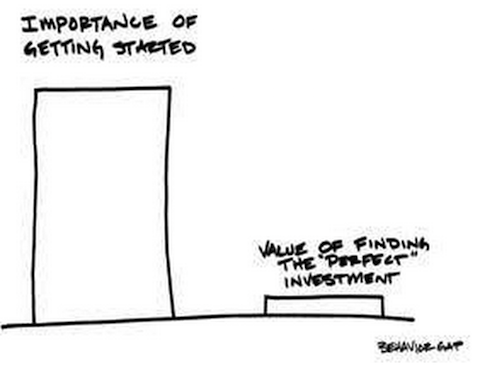
Do you already have a solid financial plan in place? Or are you just starting to think about it? Or are you so overwhelmed and daunted by the task that you're avoiding it altogether? That's the thesis of The One-Page Financial Plan, the new book by New York Times columnist Carl Richards. Rather than over thinking everything to the point of paralysis, just jot down a few general goals, get started, and don't beat yourself up over past mistakes. Richards talk about the surprising power of simplicity of getting started:
"You cannot escape the responsibility of tomorrow by evading it today." - Abraham Lincoln Planning for retirement involves near-term actions with distant consequences, and it is easy to put it off when faced with more immediate temptations or demands on one's time. Indeed, the trade-off between near-term costs and distance consequences is the reason that economists treat procrastination as a stemming from present-biased preferences. Procrastination can therefore be seen as the enemy of good financial planning. Chris Taylor from Reuters recently quoted Hollywood screenwriter William Goldman saying: "Nobody knows anything." In other words, no one knows where the market is headed. No one can tell you exactly what financial moves to make. And no one knows where they are going to be 40 years from now. Here is what you can do: Make your best guess, start and happily muddle through life the best you can! |



Editor: Shane Thom, Silke Financial Services FSP No. 12462 · An Authorised Financial Services Provider Copyright © 2015 by Silke Financial Services CC – All Rights Reserved. |