| ← All communiqués |
|
||
|
24 May 2015
Leave Emotions Out of Investing |
||
|
24 May 2015 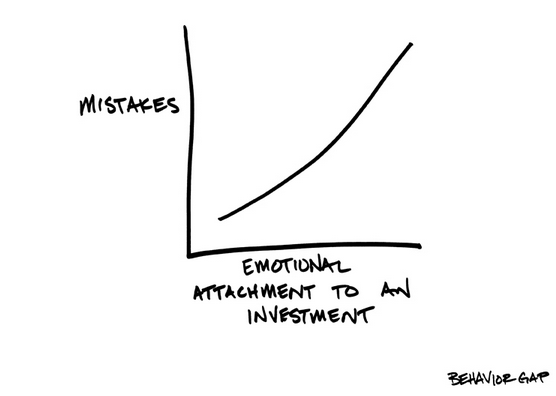
In an blog written by Carl Richards he states that in a perfect investing world, we'd all respond like robots. The markets go up, we want to sell and if the markets go down, we wouldn't have any problem buying. But because we aren't walking, talking algorithms, we'll almost always need to take emotion into account. We'll almost always need to weigh financial decisions by both the numbers and how we feel. Seeing the emotion in our investing decisions may seem like a small thing. Learning to understand it though is huge for future goals. We also need to understand how emotion can stop us from making smart decisions. We need to be aware that liking or for that matter not licking an investment may not be enough to justify owning or selling it. On top of that awareness, we need to remember how our strong emotions may lead us to making a mistake. So how do we control our emotions. We believe that one of the cornerstones of how one (we) can become self-managed individuals is by creating a platform for financial freedom. One does not necessarily have to wait for retirement to feel financially free; it can immediately be attained by taking control of one's finances today. The basic premise is that self-esteem and self-actualization can only occur once the human need for safety has been established. (Maslow Hierarchy of Needs) Our Integrated Wealthcare approach is based on your personal priorities and aspirations. This process is designed to give you a clear course of action for pursuing your goals that span various time horizons and life stages. We believe that with a disciplined goal orientated financial planning strategy focusing on your personal, family and work related goals; financial "wealth" can be attained. You won't lose picking the wrong funds, you'll lose because you're a human being with emotions. Silke Wealthcare Management provides continuous advice to clients regarding investment of client funds based on the individual needs of the client. Through personal discussions in which goals and objectives based on a client's particular circumstances are established, a client's personal investment plan will be developed. Account supervision is guided by the stated objectives of the client (i.e., maximum capital appreciation, growth, income, growth and income, etc.). Remember, emotion will discourage us from doing what's feared and loathed in the market, and that's where the biggest opportunities are. So since most people are emotional, we recommends staying aligned with your time-horizoned flexible portfolios. These diversified portfolios includes domestic and foreign equity, cash and bonds, as well as alternative investments such as commodities and property. One of the risks ordinary investors take every day is concentration risk. Sometimes it's because they own too much of an specific sector or jump on the band wagon, only to for the investment to crash to earth! By owning multiple funds, offers the investor an opportunity at avoiding concentration risk — thus diminishing emotional attachment. Likewise, rebalancing is crucial to building wealth. The reason why, again, is your emotions. It can be alarmingly easy to believe that one part of your portfolio will rise without a halt, never to revert to the mean. But experience shows that this just isn't so. It takes nerve to sell part of a winning hand and to use that cash to buy the "losers" in your allocation, which is rebalancing in a nutshell. Most people don't have that kind of willpower. Rebalancing helps you to see the forest for the trees, ultimately supporting the goal of safety and growth over time. Compounding is what builds a portfolio, not an all-in bet on a single asset class at "the right moment." It is crucial to stick to one's investment philosophy, to create wealth over the long term. |



Editor: Shane Thom, Silke Financial Services FSP No. 12462 · An Authorised Financial Services Provider Copyright © 2015 by Silke Financial Services CC – All Rights Reserved. |